🔮 My Six Signals for Streaming in MENA in 2026
Consolidation, Bundles, Creators, GEO, Vertical series, and Experiences
Hey streamers,
Today, I’m not looking at a crystal ball.
I’m looking at signals 👇
I’m not trying to predict the future.
I’m just listening.
Listening to big announcements in the MENA media ecosystem, like Thmanyah securing the Saudi Pro League rights and launching its own sports platform.
And listening to smaller changes, like Shahid becoming MBC Shahid.
Every year, at the beginning of the year, I collect these signals. Then I try to read between the lines and connect the dots.
Yes, it’s a bit risky.
But being right or wrong is not the point.
What matters is the process.
It forces me to combine data, market observation, and insights.
Here are my 6 signals that could change the streaming media ecosystem in MENA in 2026 👇
Read on to learn about:
Homegrown platforms will consolidate to create local champions
Bundles will change how streaming media grows
Content creators will operate like media companies
AI will decide where people watch content
Vertical series will grow in MENA, but only if done the right way
Local stories will move beyond screens
1️⃣ Homegrown platforms will consolidate to create champions
Today, there are more than 100 active media and streaming platforms across MENA, and around two third of them are local.
That fragmentation will continue, with new niche platforms launching to serve specific audiences and formats.
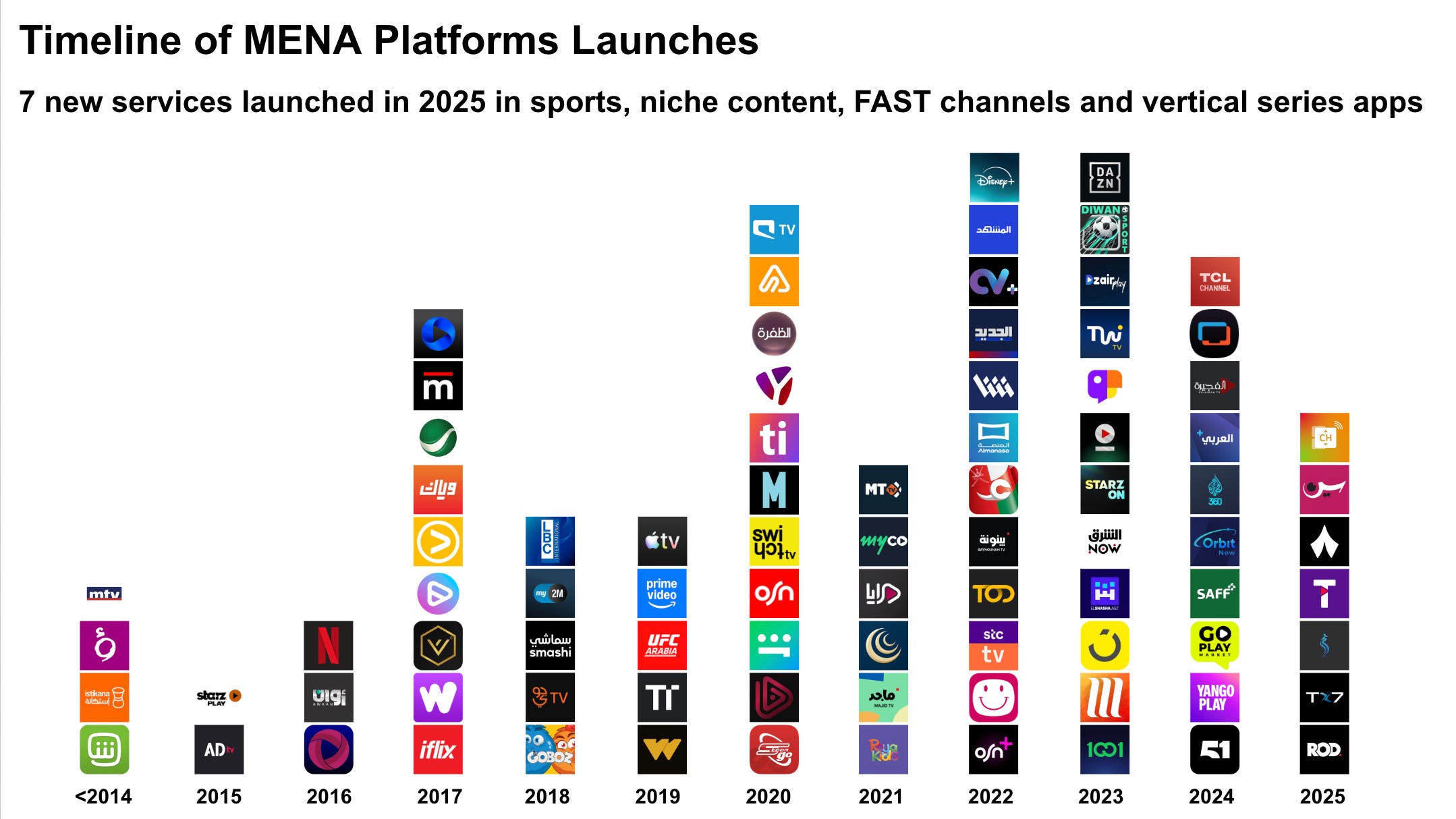
However, running a large entertainment and/or sports platform is expensive, and in most markets only two or three players can realistically operate at that level.
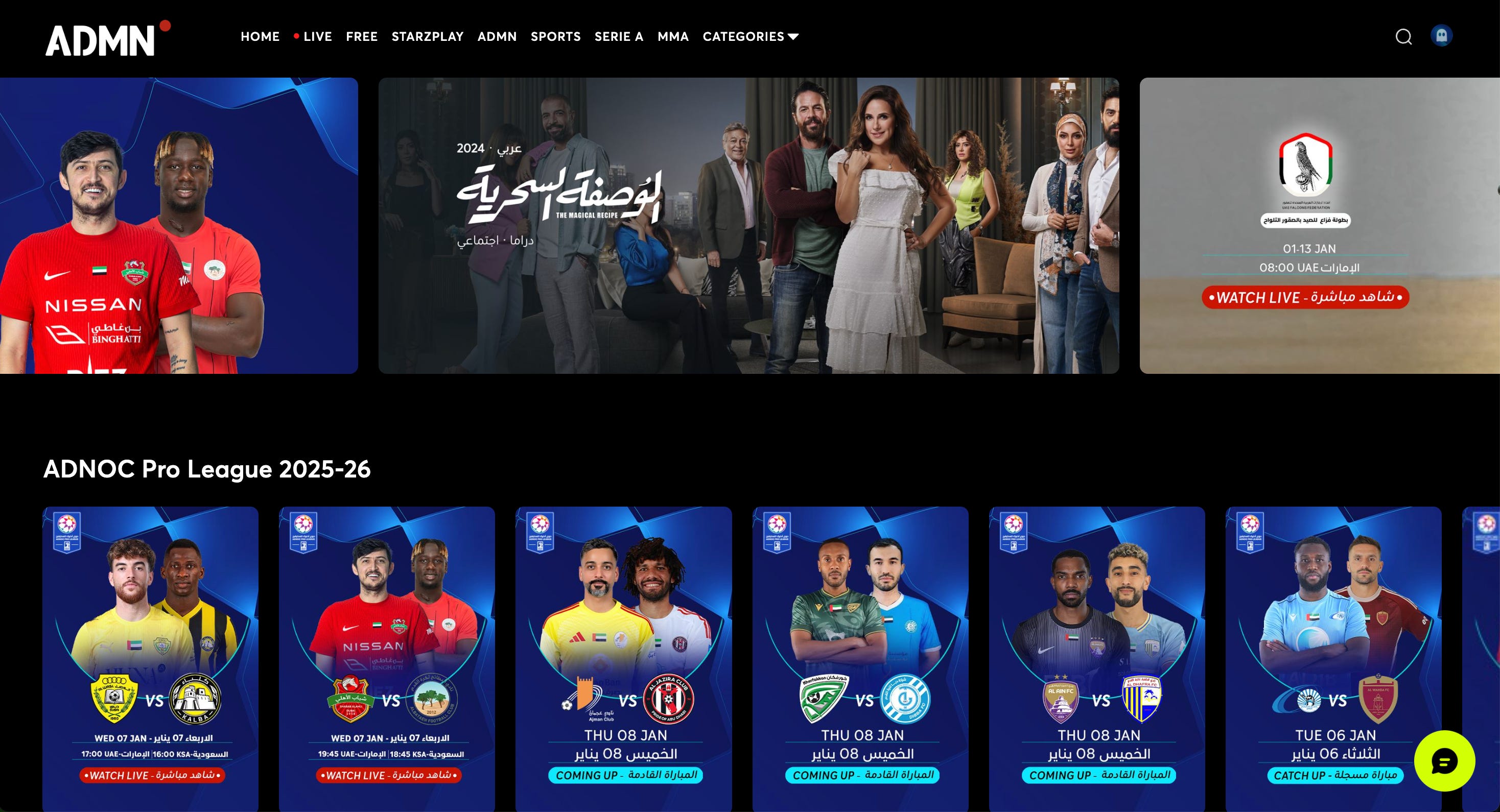
End of last year, Abu Dhabi Media integrated its streaming service ADtv into STARZPLAY. The broadcaster chose scale and distribution, trusting one of the region’s most successful pure-play streamers, now backed by the telecom e&.
The same logic could work at an even larger level:
In 2026, MBC Shahid could acquire OSN+ and bring together local strength and international positioning, creating a regional champion able to compete next to global streaming giants.
2️⃣ Bundles will change how streaming media grows
A year ago, bundles still felt nice to have. Today, they are starting to feel like a must-have in MENA.
Take Yango Play as a first example.
The platform integrated anime content from Crunchyroll directly into its app. For Crunchyroll, this means more reach in the region without having to build everything on its own. For Yango Play, it is a simple way to strengthen its offer and clearly position itself around a strong niche.
A different approach appeared with Shahid, OSN+, and Disney+:
Each service keeps its own app and identity, but users can access all 3 through one bundle at a single price. From a user point of view, the value is easy to understand: more choice, less friction, and better value for money. From a platform point of view, bundles help reduce churn and make growth easier in an increasingly crowded market.
If bundles between platforms helped streaming media grow in 2025, modern bundles in 2026 will go beyond streaming.
They will offer value across everyday lifestyle services, not just entertainment.
A good example is the launch of Ziina Violet. For AED 100 per month (USD 27), the bundle includes 12 premium lifestyle benefits, with a total value of more than AED 850 per month (USD 231). The offer includes services such as Deliveroo, ClassPass, Letswork, SALT, CAFU, Washmen, Ounass, NordVPN, and of course Yango Play.
This is where bundling is heading in MENA: Less about stacking subscriptions, and more about becoming part of daily life.
3️⃣ Content creators will operate like media companies
Saudi Arabia and the United Arab Emirates are attracting creators from around the world, while also supporting local talent.
Initiatives lie Creators HQ and events such as the 1 Billion Followers Summit happening this weekend show how serious the region is about this shift.
A strong signal came from MrBeast, who launched a temporary theme park experience in Saudi Arabia: “Beast Land”. This was not just content on a screen, but a physical entertainment experience built around a creator-led brand, designed for local audiences.
In 2026, the streaming platforms that win in MENA will be those that build with creators, not those that use them only for marketing or simply distribute their content.
Creators will also launch shows, podcasts, formats, live events, and branded experiences. Many will operate like small media companies, with teams, IP, and long-term ambitions.
4️⃣ AI will decide where people watch content
AI is now at the center of content discovery. Some platforms have already adapted inside their apps. For example, STARZPLAY partnered with BytePlus to improve search and recommendations.
But discovery is no longer happening only inside streaming platforms. More users now ask AI tools what to watch, or where a title is available, before even opening an app.
This is where GEO (Generative Engine Optimization) comes in. GEO means making sure AI systems clearly understand your content and, most importantly, which streaming platform it is available on.
I mentioned this last year in a video recorded with Marion Ranchet at IBC Amsterdam:
🤖 Discovering Content Straight from LLMs
Hey streamers! Today, let’s talk about Super AIgreggators 👇
In 2026, streaming platforms in MENA will start working actively on their GEO strategy.
Those that do will be easier to find. Those that don’t will simply become invisible.
5️⃣ Vertical series will grow in MENA, but only if done the right way
Several local vertical series projects have already launched in recent months.
Scene and Seera are pure vertical-series apps, fully focused on short, mobile-first stories.
Tesliya follows a hybrid model, mixing vertical series with more traditional content.
Other players are integrating the format directly into existing services. Yango Play and Viu have added vertical series inside their SVOD apps, instead of launching separate products.
More local projects will arrive soon, especially from platforms with more traditional business models that are now testing this format.
Today, if you are a traditional streaming platform, you have 4 options:
Add vertical series to your existing app
Launch a separate app dedicated to vertical series
Produce your own original vertical series
Work with other platforms through partnerships or bundles
Vertical series will not replace TV series. But done the right way, they can be a strong mobile entry point and a smart way to test new stories and IP.
As more platforms enter this space, fragmentation and acquisition costs will rise. In MENA, local stories and strong distribution will matter more than ever.
6️⃣ Local stories will move beyond screens
Across the region, the biggest physical entertainment projects are still built on global IP.
Theme parks like Warner Bros. World Abu Dhabi and the recently announced The Walt Disney Company theme park project in Abu Dhabi rely on Hollywood franchises to attract mass audiences.
On screens, however, the story is very different.
Across MENA, Arabic series drive engagement, especially during Ramadan, and platforms keep investing in stories that reflect local culture.
This is also visible in cinemas, where local films in markets like Saudi Arabia now represent a meaningful share of the box office, sometimes outperforming Hollywood releases during opening weekends.
The opportunity for MENA is not to build a local Disney-style destination overnight.
It starts with regular, simple activations around local series or movies: launch events, fan screenings, meet-ups, pop-ups, and live moments designed to announce a title and engage audiences locally.
Before you leave, let me know 👇
Wishing everyone a great week! See you online this Friday for a new edition of my Streaming in Short.


Love the Esmeralda / Jack Sparrow look 😁 and the trends you’ve highlighted.